The history of electricity market reforms
The method with which energy is traded in Great Britain is complicated, with multiple parties each trying to achieve sometimes conflicting objectives. For example, suppliers may be attempting to achieve the lowest tariff for their customers, whereas the National Energy System Operator (NESO), formerly the National Grid Company, is tasked with maintaining a secure system, which may not involve selecting the least expensive generation options. This reflects a fundamental tension in electricity market design between cost efficiency and system security. Since the privatisation of the electricity industry in the 1990s, there have been multiple reforms relating to the way in which electricity is traded in an attempt to curtail rising energy prices. This article explains how trading shifted from the pooling process to the New Electricity Trading Arrangements (NETA).
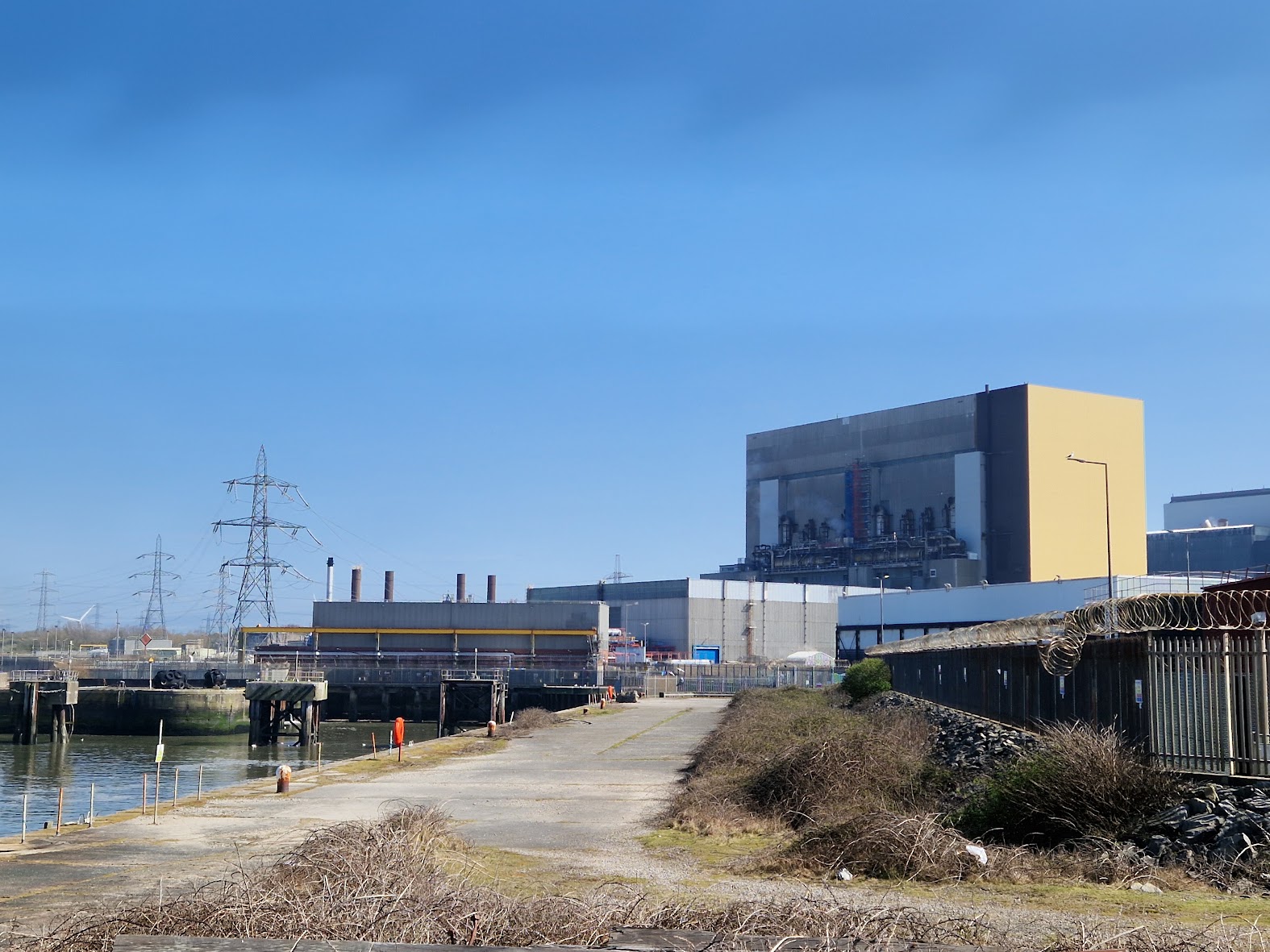 Figure 1. Heysham 1 Power Station.
The Pool
The initial mechanism used for energy supply was termed the Pool, and it operated from 1990 until market reform in 2001 in England and Wales. The Pool was a mandatory wholesale market whereby monodirectional transactions took place; generators sold energy to the Pool, and suppliers bought energy from the Pool to provide for their customers. Generators submitted offer data for the following day, which was matched with demand forecasts and, utilising a merit order, generators were selected until demand was met (from least to most expensive). This list of generators was termed the unconstrained schedule, with the most expensive generator setting the system marginal price. All generators were then paid this system marginal price, with a capacity element added for uncertainty.
Energy was sold to consumers through Public Electricity Suppliers, who also operated the local distribution networks. While the Pool improved transparency and enabled economically efficient dispatch in theory, it was undermined in practice by the market power of large generators operating in a market with few participants, limiting the effectiveness of competition and contributing to sustained high prices.
The New Electricity Trading Arrangements (NETA)
Proposed in 1998 and implemented in 2001 to combat soaring electricity prices, NETA was initially enforced in England and Wales. NETA operates as a self-dispatch market and ensured the use of bilateral trading, removing some of the inflexibility associated with the centrally dispatched Pool. In addition to a day-ahead market, intraday trading can also occur on the day of delivery, allowing participants to refine their positions closer to real time.
The point at which the balancing mechanism takes control is termed gate closure; from this point, NESO implements any changes required to run the system through the Balancing and Settlement Code (BSC). Imbalance settlement is administered by Elexon to financially incentivise participants to meet their contracted positions, thereby shifting operational and forecasting risk from the system operator onto market participants.
Distribution Network Operators had the function of Public Electricity Suppliers removed, and the role of supplying local homes and businesses was subsequently carried out by independent supplier companies, further reinforcing the separation between network operation and competitive market activities.
It is widely accepted that NETA reduced electricity prices through increased competition and more efficient market behaviour; however, this came at the expense of reduced investment, with reserve generation dropping from 35% to 22% from 2001 to 2006. This highlights a key limitation of the arrangements: while short-term price efficiency improved, long-term investment signals weakened. In addition, NETA did not fully address the concentration of market power, with well-established participants capturing a large share of customers and creating barriers to entry for smaller companies. Generators can also act as suppliers under this system, further dominating market positions through vertical integration.
Expansion to British Electricity Trading and Transmission Arrangements (BETTA)
NETA was expanded into BETTA in 2004 through the Energy Act, aiming to fully incorporate Scotland into the system adopted in England and Wales. The roles of System Operator (SO) and Transmission Owners (TOs) were separated, with the SO responsible for real-time operation of the system across Great Britain and the TOs acting as regional asset owners. This structural separation reinforced the coordinated operation of a single GB-wide market, while maintaining regional ownership of transmission assets, and represented a further step towards a more integrated but still market-driven electricity system.
Conclusion
The transition from the Pool to NETA, and subsequently to BETTA, reflects a shift from centralised coordination towards market-based mechanisms designed to enhance competition and efficiency. While these reforms succeeded in reducing short-term electricity prices and increasing market participation, they also transferred risk onto market participants and weakened long-term investment signals. As such, the evolution of electricity trading in Great Britain highlights the inherent trade-off between achieving cost efficiency and maintaining system security in a liberalised energy market.