Energy from Waste in the UK: A necessary solution or a long-term problem?
Over recent decades, the United Kingdom (UK) has sought to reduce its reliance on landfill through the use of alternative waste treatment technologies. The Government explicitly pushed the landfill tax in 1996 to drive towards a more environmentally friendly waste disposal solution. Incineration, especially Energy from Waste (EfW), has expanded significantly as a means of managing residual waste. This process heats waste to over 800°C and recovers energy in the form of heat or electricity.
Places such as the UK produce large volumes of waste; in 2022, UK Government data indicates that 191.4 million tonnes (Mt) of waste was generated. Of this, 26.12 Mt was collected by local authorities, of which then 41.5% was recycled, 8% was sent to landfills, and 47.4% was incinerated. This is illustrated by Figure 1.
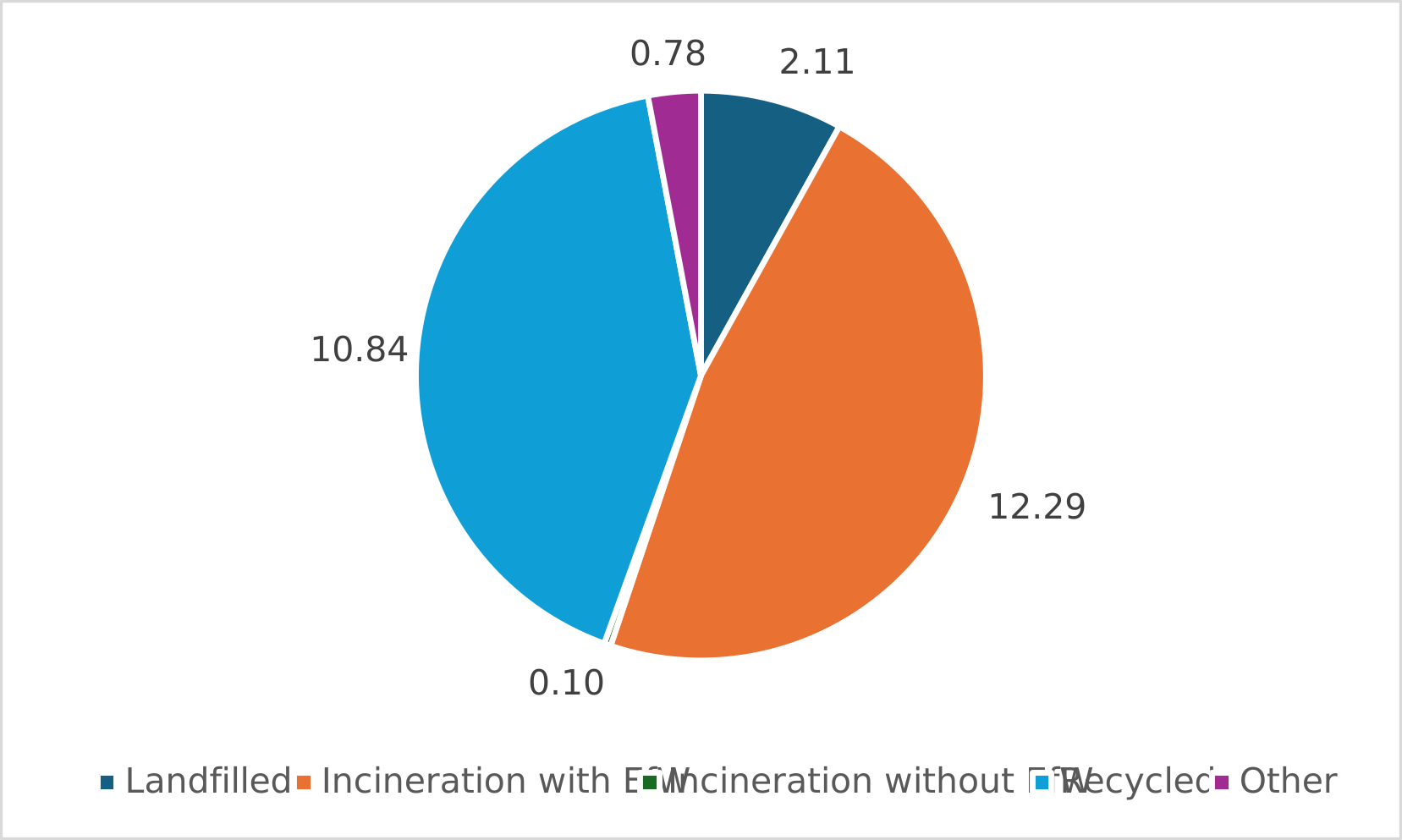 Figure 1. UK local authority collected waste in 2022 by disposal method in Mt.
The amount of waste incinerated nearly tripled between 2010 and 2020. The growing prominence of incineration has sparked serious debate among policymakers, researchers, and the general public. Central to this debate is whether incineration supports or undermines higher-priority waste management strategies, such as waste prevention and recycling. This well-known hierarchy is depicted in Figure 2.
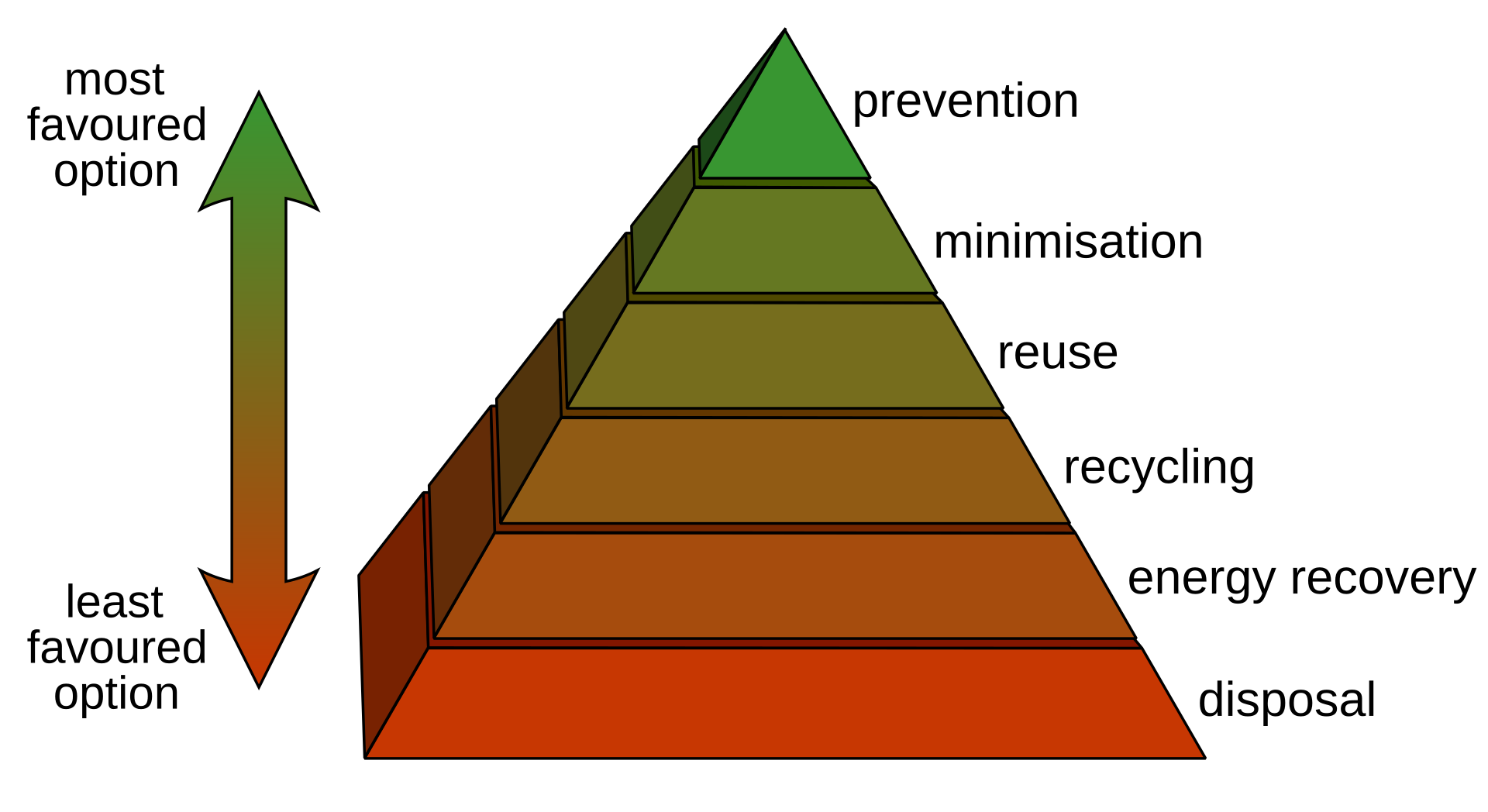 Figure 2. Waste hierarchy pyramid.

This article examines the current role of incineration within the national waste system and evaluates its implications for environmental sustainability and public policy.
Policy and requirement for incineration
Waste management in the UK is guided primarily by national policies shaped by international environmental commitments, with the current stance emphasising the reduction of landfill use, higher recycling targets, the expansion of energy from waste capacity, and the expansion of carbon pricing mechanisms. Together, these measures aim to integrate waste management more closely with broader climate and resource-efficiency objectives.
Landfill diversion
One of the principal justifications for incineration is its capacity to divert waste from landfills. Landfill sites generate gases such as methane (40-50%) and carbon dioxide (50-60%), which is due to anaerobic decomposition catalysed by the microbes present in the land. Methane is 25 times more potent as a greenhouse gas than carbon dioxide. Landfills require long-term management and contribute to 4% of the UK’s greenhouse gas inventory. Incineration can reduce waste volume by up to 90%, thereby limiting land use pressures. In 2021, engineering consultancy Fichtner estimated that EfW saves around 200 kg of carbon dioxide equivalent emissions per tonne of waste when compared with landfill (being 230.9 and 432.7 kg respectively). The reality is that these values will vary with waste stream composition, making the figures challenging to verify universally. Landfills destroy natural habitats and produce landfill leachate, which is highly toxic to fauna.
Energy recovery
EfW facilities convert residual waste into electricity and, in some cases, heat. Proponents argue that this contributes to energy security and partially offsets fossil fuel use. Incineration that only recovers electricity can expect efficiencies of 27%, and recovering heat can increase this further.
Opportunities and challenges
The following sections outline the principal challenges and opportunities associated with EfW facilities in the UK in terms of public health and perception, greenhouse gas emissions, cost and economic stability.
Greenhouse gas emissions
Although regulated as industrial installations, incinerators emit significant quantities of carbon dioxide, particularly from fossil-derived materials such as plastics. The waste feedstock makeup directly impacts the output emissions. An investigation by the BBC found that the average equivalent carbon dioxide emissions per kilowatt-hour for UK incinerators were 720g, which is only 10g less than coal and 1.8 times more than gas. Incineration accounts for 3.1% of the UK’s power generation, meaning that the high intensity of carbon emissions is offset by its minor contribution to the generation mix. Furthermore, the primary objective of energy from waste is not to produce energy, but rather prevent waste from being sent to landfill, producing less environmental harm in comparison.
Other air pollution
Modern incinerators employ advanced filtration systems to control emissions of particulates, nitrogen oxides, and heavy metals. In addition, bottom ash and fly ash require careful management, with some residues being hazardous waste and disposed of as such. Generally, due to the strict controls in place, incineration plants pose lower risks to human health when compared with other prevailing waste management techniques. From a material perspective, incineration represents the irreversible loss of potentially recoverable resources. Recycling and re-use is limited to collecting metals from ash.
A study by Imperial College London looked for a link between infant and reproductive complications when in proximity to incinerators. A 2% increased risk for all congenital anomalies and up to 7% increased risk for genital anomalies was observed for individuals in proximity to incinerators, though these may be due to other factors (for example, higher levels of deprivation).
The Environment Agency strictly monitors waste incinerators’ emissions output to ensure that compliance with environmental permits is maintained.
Capital investment
EfW plants require substantial upfront investment; typical capital expenditure is circa £5 million per megawatt of installed capacity. Long-term contracts are required to de-risk these investments, which can create “lock-in” effects, whereby authorities are incentivised to maintain waste flows to ensure financial viability. Such dynamics may conflict with waste reduction strategies.
Operational costs
Incineration can be more expensive than landfill in the short term, particularly when transport and gate fees are considered. However, landfill taxes (£130.75 per tonne in 2026) and regulatory constraints have made EfW comparatively attractive. Future carbon pricing may alter these cost relationships.
Market volatility
Media and activist groups have raised concerns regarding potential overcapacity in some regions. If residual waste volumes decline, facilities may compete for feedstock, possibly encouraging the diversion of recyclable materials to incineration. Increasing incineration of waste raises concerns regarding the UK’s net-zero commitments.
Social factors
Public opposition to incinerator projects remains strong in many communities, with concerns commonly focusing on visual and landscape impacts, including visible water vapour emissions from equipment and the requirement for large flue stacks, increased traffic and noise, perceived health risks, and a lack of trust in regulatory oversight. As a result, planning processes must carefully balance national waste management strategies with local democratic accountability and principles of a just transition.
Alternatives to incineration
Organic waste is the most harmful waste to be sent to landfill in terms of greenhouse gas emissions. Anaerobic digestion offers a lower-carbon alternative for managing biodegradable waste. Through controlled biological processes, food waste is broken down in oxygen-free conditions to produce biogas, which can be used for electricity generation, heat production, or upgraded to biomethane for injection into the gas grid. The remaining digestate can be applied as a fertiliser, supporting nutrient recycling and reducing dependence on synthetic inputs. Compared with incineration, anaerobic digestion retains higher material value by recovering both energy and nutrients, aligning more closely with the waste hierarchy. It is limited based on the quality of input material, although DEFRA have increased council funding to support this technology through dedicated household food waste collections.
Summary
Waste incineration currently occupies a central role in the UK’s residual waste management strategy. Its advantages in landfill diversion and energy recovery are balanced by environmental, economic, and systemic drawbacks.
While incineration may remain necessary in the short term, its expansion should be carefully constrained. Future policy should prioritise waste prevention, recycling, and material circularity, ensuring that incineration does not impede progress toward long-term decarbonisation, as underpinned by key environmental principles.