Carbon dioxide production, capture, utilisation and storage
The concept of global warming due to greenhouse gases, catalysed by the industrial world, is not a new one. It was first proposed in 1824 by Joseph Fourier, where he established a link between gases in the atmosphere and the heating of Earth. The greenhouse gas effect is characterised by infrared radiation from the Sun reflected off the Earth’s surface being trapped by the greenhouse gas content of the atmosphere, which limits this radiation from escaping into space. One of the most prominent greenhouse gases is carbon dioxide (CO2), a product of combustion reactions involving fossil fuels. The release of CO2 from fossil fuels is particularly problematic when compared to other fuels due to the time it takes to form, resulting in a net release of CO2 for long periods. Figure 1 shows the 60% increase in global fossil CO2 emissions between 1990 and 2021. This dramatic uptake has been linked to many devastating impacts on everyday life. The most significant effects occurring or projected are increases in extreme weather events like droughts, wildfires and heavy precipitation, warm-water coral bleaching, sea level rise and many more. It is lucid from these effects that actions must be taken to curtail the effects in the short term and eventually reverse them. This means not only must net-zero greenhouse gas emissions be achieved, but existing greenhouse gases need to be removed from the atmosphere to return to a stable equilibrium.
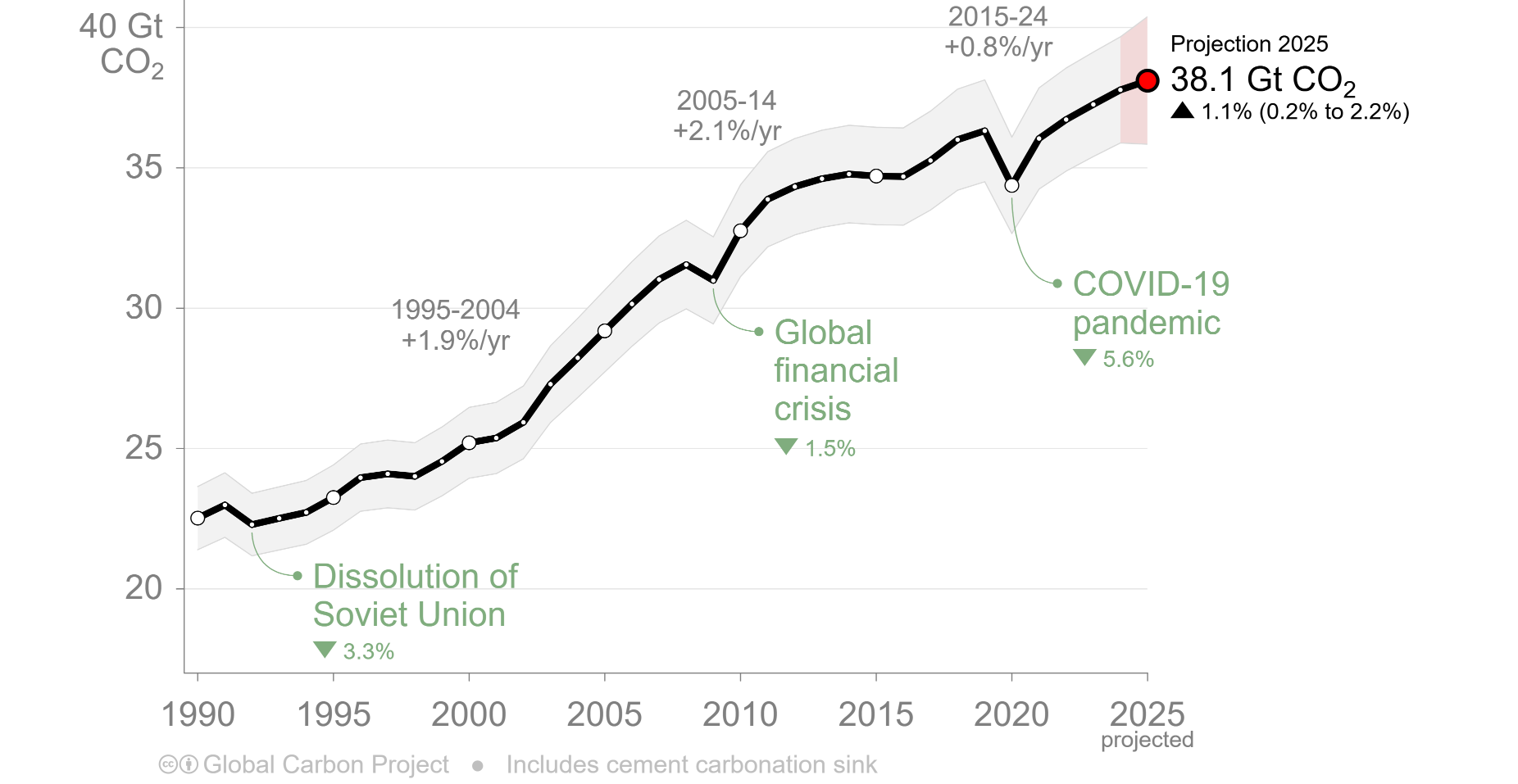 Figure 1. Global carbon dioxide emissions 1990-2021.
Carbon capture
Carbon dioxide can be captured from fossil fuels before or after they have been combusted, from exhaust flues or remote from the emitter, directly from the air. Direct air capture, or DAC, is challenging due to the low concentration of CO2 in the air at around 425 parts per million (0.04%), and thus the least utilised method due to high energy demand. As exhaust flues from fossil fuel combustion reactions have a much higher concentration of CO2, it is generally more effective to capture CO2 here, being much less energy intensive. Typically, amine scrubbing is used, which can reduce emissions by up to 99%. The problem is that the plant requires additional energy to capture the CO2, resulting in typically 15-30% more fuel being combusted in the case of a power station. Due to high installation and operation costs, combined with the lack of current incentives to change industry practise, all combined cycle gas power plants in the UK run unabated, meaning that their emissions are not captured. Pre-combustion, hydrocarbons can be processed to separate CO2 and hydrogen (H2), allowing the H2 to be combusted in the power plant with the CO2 being stored, this can reduce the energy requirement by around half of post combustion capture due to the higher concentrations of CO2 that can be achieved.
Carbon utilisation
CO2 has a myriad of uses, examples being carbonation of drinks, welding, fire extinguishers and agriculture. Perhaps ironically, one use of CO2 is enhanced oil recovery. This process floods oil wells with CO2 to extract further fossil fuels, which conventional extraction methods cannot achieve. Many of these uses do not lead to a reduction in greenhouse gas emissions as the CO2 is only temporarily stored, being released later. Other permanent uses are too small-scale to store significant volumes of emissions.
Carbon storage
Carbon capture is pointless without effective storage methods to prevent the gas from being released to the atmosphere. The primary method of storage, which will be required considering the volume of CO2 to be stored, will be by using existing subsurface porous geological structures. Once captured by one of the methods in the previous sections, the CO2 must be compressed and transported, e.g. by pipeline, to the site of injection. The site of injection could be onshore or offshore and will connect to an injection well feeding a subsurface reservoir. Once in the reservoir, the CO2 will be retained by caprock and various physical or chemical trapping methods.