SF₆: the greenhouse gas the electricity industry keeps quiet about
Sulfur hexafluoride (SF6) is widely used in high voltage applications, either as an arc interrupting medium or an insulating gas. SF6 is extremely effective for this purpose, additionally being odourless, colourless, non-toxic and stable at extreme temperatures. Where SF6 is used as an arc interrupting medium, the gas is contained within a device, with the gas passing between circuit breaker contacts when they are opened. When used as an insulating medium, busbars are suspended within gas-filled cylindrical sections, which allow conductors to be housed much closer together.
The benefits of SF6
Before the adoption of SF6, air-insulated substations (AIS) were the prevailing installation, requiring large safety distances between pieces of equipment to prevent flashovers, subsequently making the overall substation footprint larger. The space required for gas-insulated substations (GIS), however, is typically 20% of the equivalent AIS substation. This factor is particularly significant for densely populated areas and city substations, making GIS an attractive alternative, requiring less capital for land purchasing. Although the cost of equipment is higher for GIS substations, they are shielded from the elements and generally placed indoors, reducing maintenance requirements and making them very reliable.
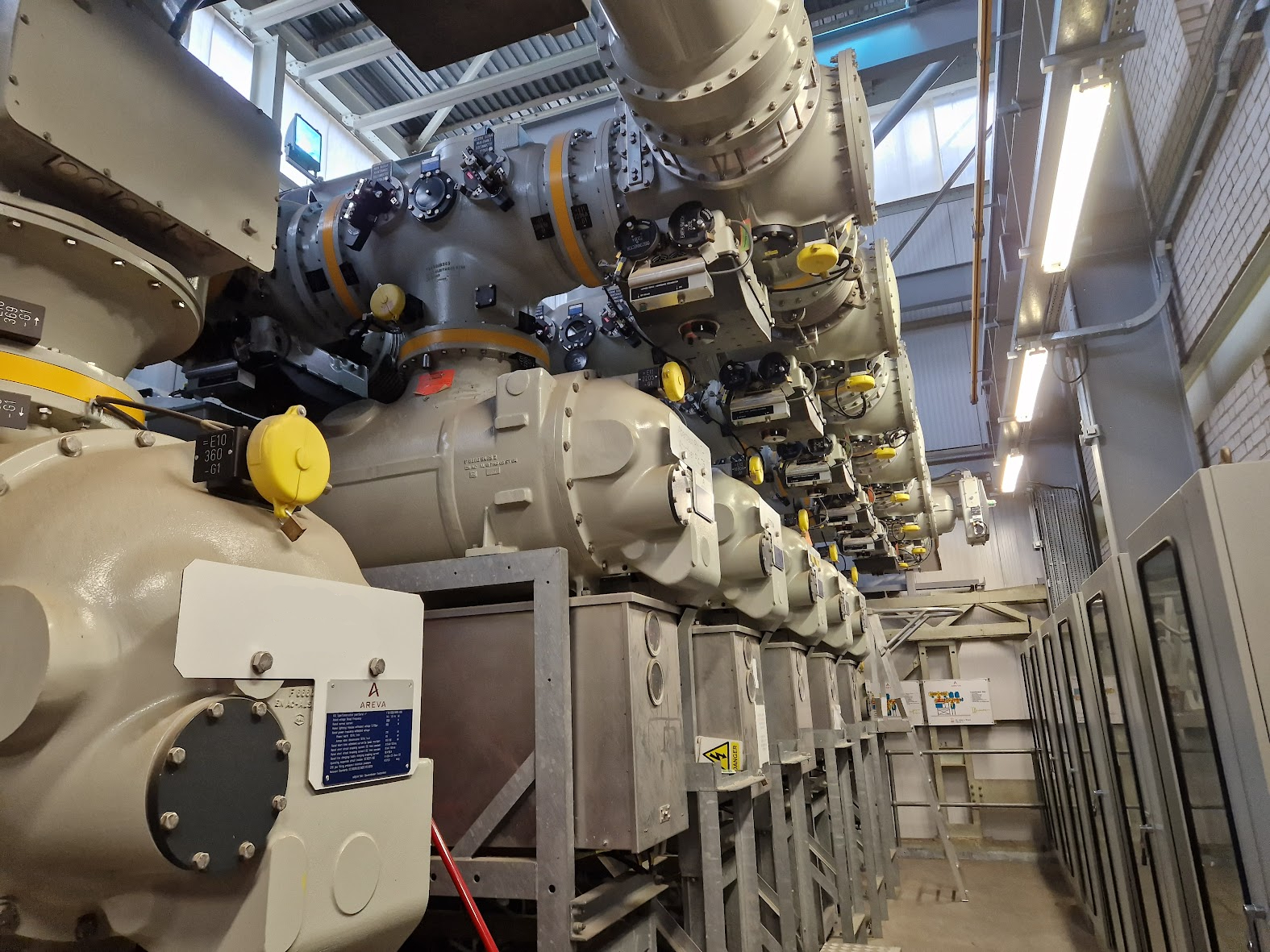 Figure 1. 132 kV GIS substation (note that the busbars are not phase segregated, and that all three phases are contained within one chamber for each circuit).
The catch with SF6
SF6 has a huge global warming potential (GWP) of 23,500. GWP represents the capability of the gas to contain heat within the atmosphere relative to carbon dioxide. As such, CO2 has a GWP of 1, making SF6 23,500 times more potent. The GWP can be further compared to other greenhouse gases in Figure 2. Coupled with its widespread adoption, it is one of the most significant challenges in terms of sustainability for electrical transmission and distribution companies. It is anticipated that the UK Government could take a similar approach to SF6 as the European Union (regulation EU 2024/573), with potential bans on virgin gas from 2035 and a phase-out of >145 kV equipment from 2032, where they use F-gas with a GWP >10. The EU regulation introduces a staged timeline, where harmful gases are banned for use at lower voltages sooner than higher voltages, as commercially viable alternatives are already available at these levels.
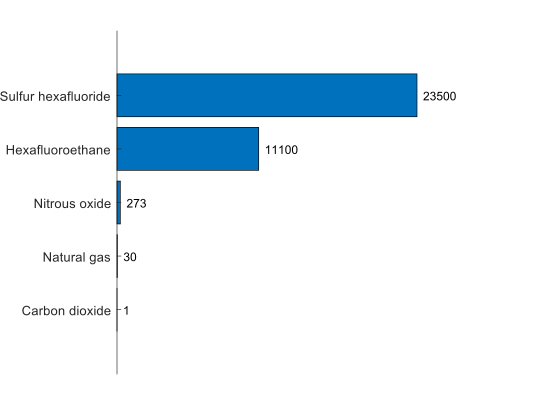 Figure 2. Global warming potential of various greenhouse gases (100 year timescale).
0.3 MtCO2e was emitted in the UK during 2023 due to SF6 emissions, equating to 13 t of SF6. During the 2023 financial year, National Grid Electricity Transmission was responsible for 9759 kg of SF6 emissions, Scottish Power was responsible for 693 kg and Scottish and Southern Electricity was responsible for 265 kg across its network businesses. Overall emissions were 385 MtCO2e, making the contribution from SF6 0.01%.
The future of insulating mediums
It is highly likely that a gas-insulation medium will be essential at certain substations due to space constraints. This means that solutions to the SF6 problem are limited to using less harmful alternative gases. Alternative gases are being introduced for new installations, which are significantly less harmful to the environment by companies such as Siemens (Clean Air which utilises a 80% nitrogen and 20% nitrogen mix, which has a GWP of 0), GE Grid Solutions (g3 gas, which has a GWP of 235) and Hitachi (EconiQ gas, which has a GWP of 400). In some instances, these gases are only suitable for gas zones which only house busbars, meaning that circuit breakers and isolators still have to be housed in SF6 filled tubes. Even where this hybrid solution is used, significant reductions in SF6 useage is achieved.
For existing substations, recycling SF6, rather than using virgin gas, is one way of minimising emissions. Naturally, fixing existing leaks and utilising capture devices also minimises emissions. One of the most promising solutions for existing installations is retro-filling, whereby existing equipment has its SF6 gas removed, and a lower GWP replacement is used to take its place. This is estimated to be an order of magnitude less expensive than replacement with entirely new equipment utilising the low GWP gas.